
Insights from the American Coatings Show 2026 | Indianapolis, IN
The American Coatings Show 2026 in Indianapolis brought together hundreds of the world’s top coatings scientists, formulators, and raw material experts – and the message on regulatory compliance came through loud and clear: substance restrictions are now the single biggest regulatory pressure reshaping formulation work today.
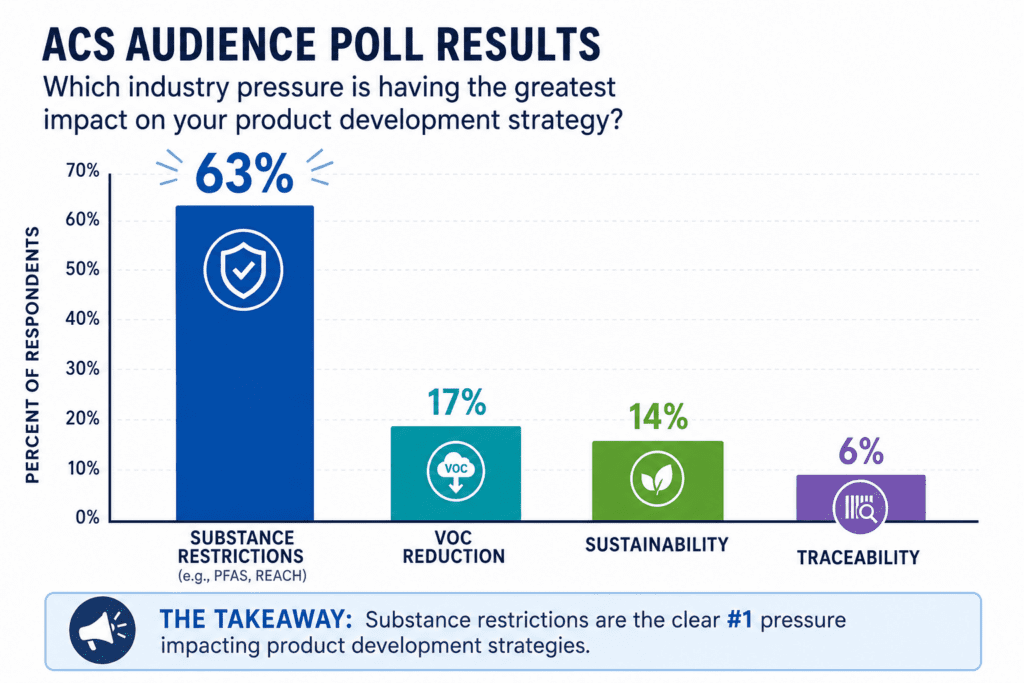
A live audience poll conducted during the conference’s plenary session, drawing more than 350 coatings experts, asked participants to identify the regulatory pressure having the strongest impact on their formulation work. The result was emphatic: 63% of respondents cited restrictions on substances of concern as their top challenge – far outpacing VOC reduction requirements (17%), sustainability and carbon-footprint demands (14%), and traceability and reporting obligations (6%).
“63% of coatings experts say restrictions on substances of concern are the #1 regulatory pressure impacting their formulation work today.” — American Coatings Show 2026, Audience Poll
How Substance Restrictions Impact Coatings Formulators and Supply Chains
This isn’t a surprise to anyone working in chemical compliance. The global regulatory landscape for hazardous substances continues to tighten, with REACH SVHCs, US EPA Toxic Substances Control Act (TSCA) updates, California Prop 65 expansions, and national chemical restrictions across the EU, UK, and Asia-Pacific all creating a patchwork of ever-shifting requirements that formulators must navigate simultaneously.
When a substance of concern appears – or is banned – in a coating formulation, the downstream effects are immediate and significant:
- Safety Data Sheets (SDS) must be updated quickly and accurately across all relevant languages and markets
- Reformulated products require re-classification under relevant regulations and updated hazard communication
- Supply chain partners need to be notified of ingredient changes – often across dozens of distributors and downstream users
- Regulatory exposure increases when SDS documentation lags behind formulation changes
Why Manual SDS Processes Create Compliance Risks
One of the core challenges is timing. Substance restriction decisions – whether from ECHA’s SVHC candidate list additions, national bans, US EPA risk evaluation outcomes, etc. – often create tight compliance windows. Companies relying on manual SDS authoring or fragmented chemical data management are frequently caught scrambling.
When regulators add a substance of concern, you don’t get extra time because your SDS process is slow. You need systems that move as fast as the regulatory landscape does.
For coatings manufacturers specifically, where formulations can contain dozens of ingredients and product portfolios can span hundreds of SKUs, the scope of updating, approving, and distributing new SDS documents is a significant operational burden. Multiply that across global markets requiring country-specific SDS formats and languages, and the compliance challenge becomes immense.
How Enhesa Helps Coatings Companies Manage Chemical Compliance
This is precisely the challenge Enhesa is built to solve. Our SDS authoring and management platform provides:
- Continuously updated regulatory content – including substance restriction lists, SVHC updates, and classification changes – so your SDS reflects current requirements
- Flagging when ingredients in your formulations appear on restricted substance lists, giving compliance teams early warning before a regulatory deadline hits
- Chemical lookup and inventory monitoring – search any substance against hundreds of global regulatory lists (including watch lists) and receive proactive notifications the moment a chemical in your inventory becomes listed or restricted
- Multi-country, multi-language SDS generation – meeting the format and content requirements and local regulations simultaneously